
If you’re running a business or organization, you know how important it is to be visible when potential clients or supporters are searching for the latest info. One simple yet effective SEO strategy is to include the year in your blog post titles (H1 tag), meta titles, and body copy. Doing this can give your content an edge in search results, signal that your information is current, and help build trust with your audience (like you’re really keeping on top of things).
It’s currently December 2025, and folks are just about finished searching for the “best _______ in 2025.” They want the latest and greatest, not last year’s info. We’re only a few weeks away from 2025 being a mere memory and in the history books. In fact, your savvy prospects already want to know what’s the “best ________ in 2026.”
How Including the Year Helps Your Blog Posts
Adding the year to your title, meta title, and copy can:
- Show that your content is current. Many topics change each year, such as web design trends, marketing tools, or best-of lists. Including the year signals that your content reflects the latest information.
- Attract people searching for current information. Your posts are more likely to appear in search results for timely topics.
- Increase click-through rates. People are more likely to click on posts that feel up-to-date. Seeing the year in the title makes readers more confident they’re getting current information.
- Protect your SEO value while staying flexible. You can update the content each year without losing the search authority your pages have built by not including the date in the URL.
Research confirms this approach works. SEO experts have tested and proven that including the current year in titles can improve engagement, especially for content that changes over time. Updating titles and content for the year can also increase keyword growth and search visibility. Also, this approach positions your organization as knowledgeable, reliable, and forward-thinking
Examples from Motionbuzz.com
We already use this strategy on our blog to keep content relevant and helpful for our clients. For example:
- Best WordPress Page Builders in 2026, which highlights our top tools for building modern WordPress sites and what we plan to use in 2026.
- Healthcare Web Design Trends in 2025, which explores the latest trends in healthcare website design. This post had good SEO visibility in 2025, and we’re’currently working on updating it for 2026.
When these posts are updated with the year in the title, they show potential clients that the content is current and reliable. This helps attract new visitors who are actively looking for timely information.
Best Practices for Using the Year in Titles
To get the most benefit from including the year in your blog titles:
- Only add the year when it’s relevant. For content that doesn’t change over time, the year may not be necessary.
- Don’t include the year to your URL. Keep the date out of URL if it’s an evergreen topic. This allows you to update the post each year while maintaining the SEO authority you have already built.
- Update the content. Make sure the post reflects current trends, tools, and examples. Don’t just update the year in the title or meta title.
- Optimize the full post for humans, search engines, and LLMs. A strong title helps, but long-form, high-quality content is still essential for ranking.
Use clear keywords. Titles like “Top 10 ______ in 2026” or “Best _______ in 2026” combine the year with phrases people search for. If you’re a local business, be sure to include the location.
Here is an example:
When I search for “best accounting software in 2025,” one of the top results is for PCMag.com.
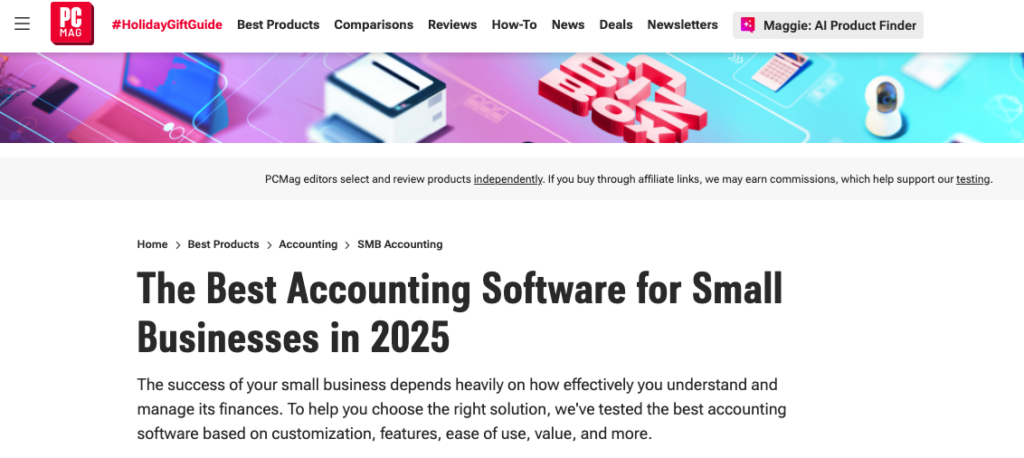
Notice the title includes “2025” but the URL doesn’t:
https://www.pcmag.com/picks/the-best-small-business-accounting-software
The next example is about sushi. I love sushi, and I’m always trying new restaurants when I travel…to a coastal destination.
When I search for “best sushi restaurants jacksonville fl 2025”, one of the top results is for TripAdvisor.com.
The meta title is almost a perfect match. Notice it specifies “Updated 2025.” That’s a smart tactic and easy to do in WordPress using Yoast or Rank Math.

The URL doesn’t include “sushi” or the year, but it includes “Jacksonville_Florida.”
https://www.tripadvisor.com/Restaurants-g60805-c38-Jacksonville_Florida.html
The landing page doesn’t even include the year. Go figure.
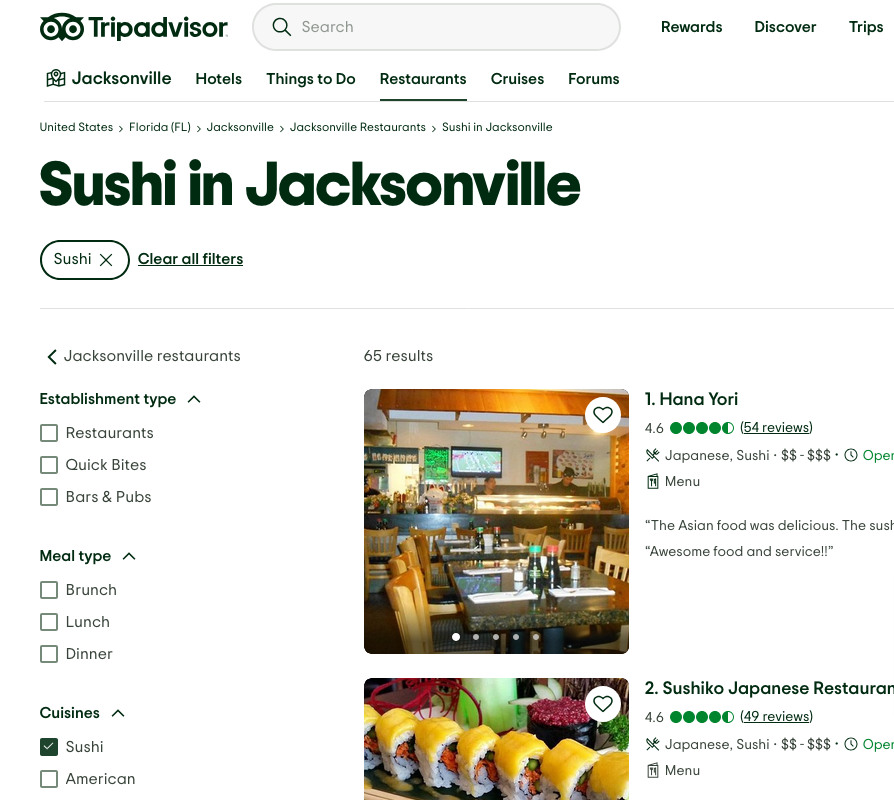
Hmm… so what does this tell us? This example proves that even if you only include the year in the meta title, then that can still help SEO for year-specific queries. But maybe only if you have mad DR like TripAdvisor.com.
Does using the year matter for Google AI Overview or LLMs?
You might be wondering if any of this matters in the age of AI, and the answer is yes. Google and Bing are still looking for the most relevant and up-to-date information. If someone searches for “Best ______ in 2026” then it’s helpful if your content includes the year in the meta title, H1, and somewhere in your content.
Is it a good time to start including 2026 in blog posts?
Yes, Q4 2025 through Q1 2026 is the perfect time to include 2026 as part of SEO. Including the year in your content is a simple and effective way to increase visibility, attract readers who are searching for the latest and greatest info, and signal that your business is on the ball. When combined with high-quality, updated content, it helps your organization stand out in search results and builds trust with your audience.
If you’re a healthcare provider, nonprofit, higher-education institution, or local business and need help with SEO in 2026, contact us!
About the author:
Thomas Gapinski is a digital marketing leader with over 25 years of industry experience. He is principal and creative director at Motionbuzz.
Thomas helps businesses grow by combining content strategy, SEO / SEM, and modern web design to create digital experiences that attract, convert, and build long-term trust. He is a proven expert in digital marketing and emerging AI technology. Thomas helps organizations show up where people search, whether that’s Google, LLMs, or the next generation of intelligent platforms.